
About

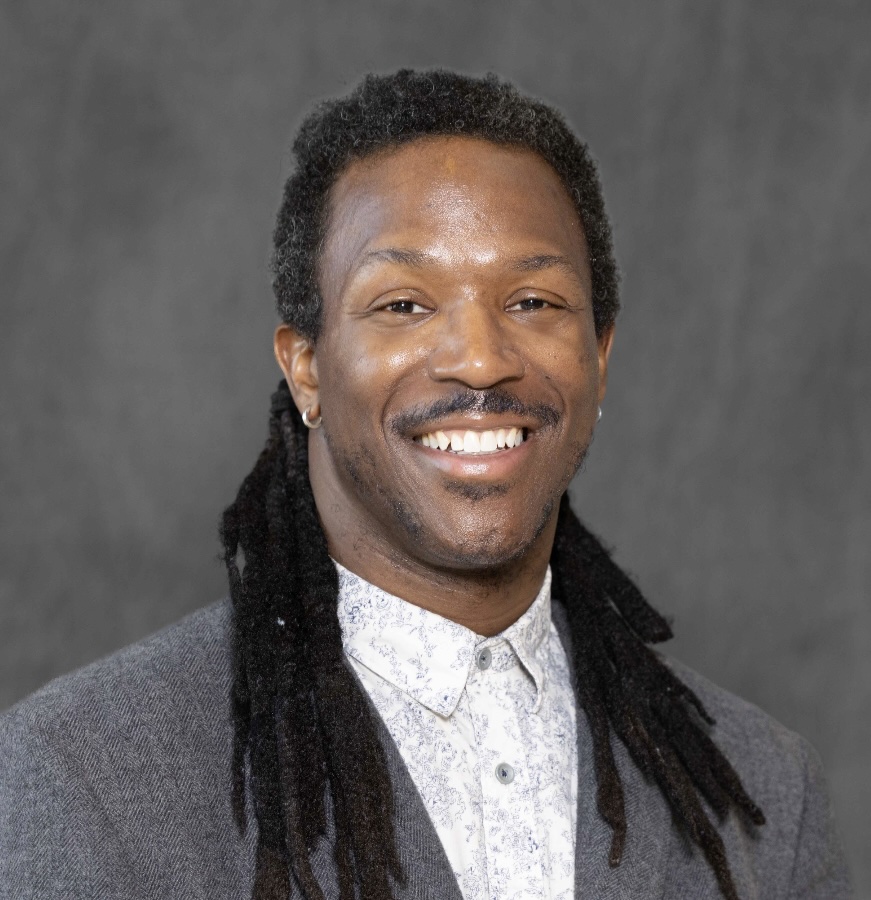
Joshua Aiken is a writer and legal scholar. He studies how the ordinary machinery of American law — a traffic stop, a gun charge, a suspended license, an asylum claim — decides who is protected and who absorbs harm, and how those decisions come to seem like common sense.


His current research agenda follows guns, and the competing claims of gun control and gun rights, through twentieth-century U.S. law to show how that debate has organized racial distributions of harm—how anti-Blackness structures who counts as an armed citizen and who becomes an armed threat. Three projects are underway.


  • Reasoned Suspicion returns to the years around Terry v. Ohio to show how facially neutral gun laws taught police what suspicion should look like—a history that runs directly into stop-and-frisk, automated license plate readers, and the surveillance systems now making those judgments at scale.

  • Shadow Regime introduces “gun-driven incarceration”, an empirical framework that reconstructs decades of state and federal data to measure how firearm charges and enhancements shaped the growth of American prison populations, a contribution that has gone largely unaccounted for.

  • Armed Authority turns to the 1990s, when the Justice Department armed roughly ten thousand civil immigration officials by administrative rule and Congress handed them warrantless arrest power—an expansion of federal enforcement authority built on the premise that non-citizens are inherently dangerous, and the origin of the armed power now operating in American cities.


Across his research and writing, Joshua works across oral histories, trial transcripts, government reports and rulemaking, legislative records, and the press: the documented record, and trace elements, of how everyday people encounter the law.

These research questions reached him, before the archive did. Gun violence, mass policing, and the criminal legal system wereand areordinary conditions of Black life, Black communities and his family’s personal experience. At Oxford, where he was a Rhodes Scholar from 2014-2016, he studied forced migration and organized with Black Lives Matter and #RhodesMustFall. As a Policy Fellow at the Prison Policy Initiative, he authored reports on jail growth and drug-related license suspensions that were taken up by The New York Times and cited in legislation in five states and in Congress. While a graduate student, he was Researcher-in-Residence at Artspace New Haven for “Revolution on Trial,” fifty years after the New Haven Black Panther trials, building curriculum for local high schools out of the archive. He drafted briefs and motions on prison conditions at Rights Behind Bars, and with the Liman Center directed the revision of Connecticut’s prisoners’ rights manual. For two years he co-directed a Yale Law School practicum on the criminalization of queer and trans people and youth. He also co-directed the 2023 Rebellious Lawyering Conference and co-edited its proceedings, Notes on Law & Liberation, which published poems by incarcerated young writers of the Free Minds Book Club alongside his interviews with poets Marwa Helal and Quenton Baker.

In 2024, after years of working as a tutor with the Yale Prison Education Initiative, he taught a seminar and writing workshop on “Poetics and Citizenship” at MacDougall-Walker Correctional Institution. Aiken is also a poet. Of his chapbook to be in & of, the inaugural winner of the Palette Poetry Chapbook Prize, Evie Shockley wrote that the poems put “pressure on language like he means to turn each word into coal & then burn it all down,” and Danez Smith called them “brazenly honest, as sound as they are shattering.” A Cave Canem Fellow supported by the de Groot Foundation and the Vermont Studio Center, his full-length manuscript has been recognized by the St. Lawrence Book Award and the CAAPP Book Prize, and his poems appear in Apogee, Muzzle, Paperbag, The Rumpus, Forklift, Ohio, Green Mountains Review, The Indianapolis Review, BOAAT, and Sixth Finch.

He is an Assistant Professor of Law at Wayne State University Law School, lives in Detroit, Michigan, and can be reached at joshua.aiken[at]wayne.edu.